
Monteverde weather: plan for the mountain forest
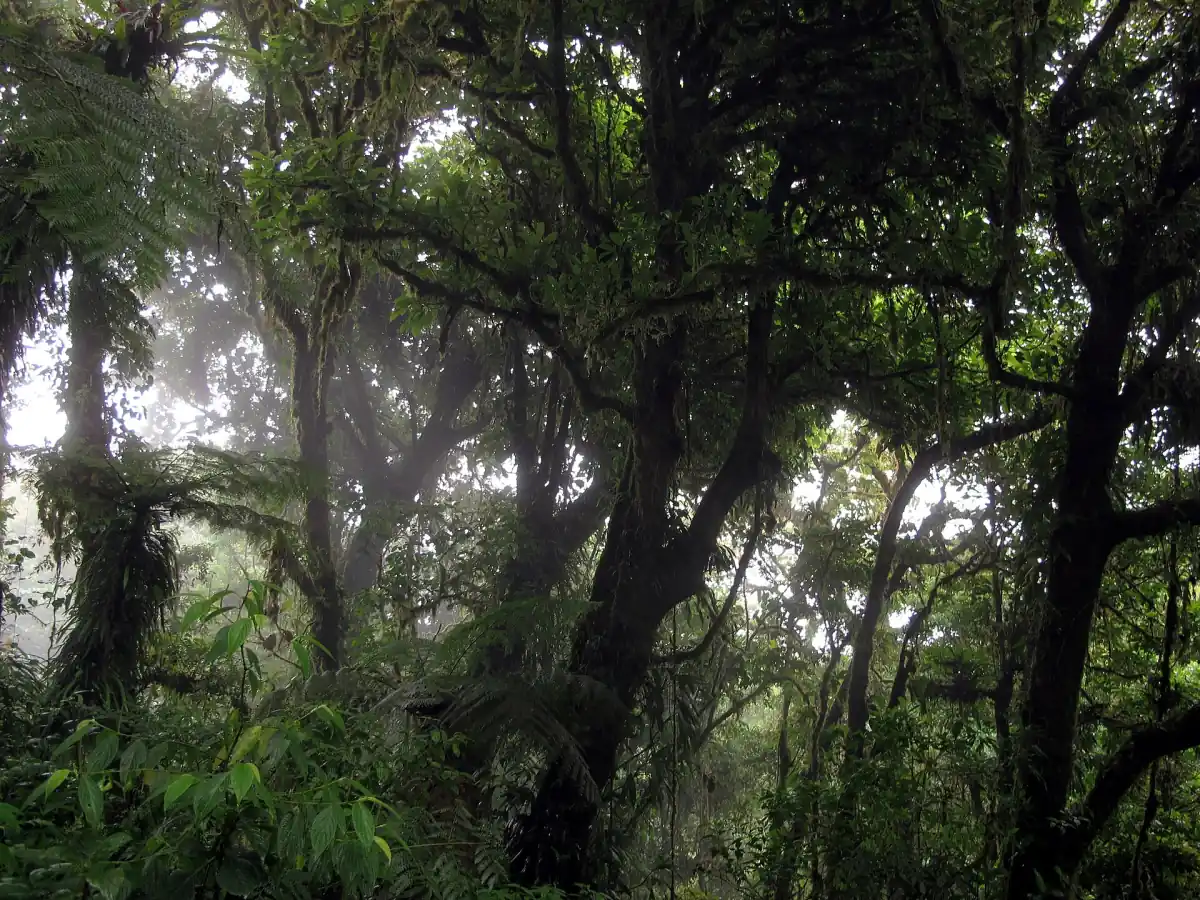
Monteverde weather is shaped by elevation and exposure at the continental divide. Moist tropical air rises, cools and condenses into mist that wets leaves, mosses and roots. That process is part of the cloud forest itself, so a visit is about more than choosing a month with the least rain. Think about the kind of forest experience you want and leave flexibility around outdoor activities.
The main reserve straddles the watershed between the Pacific and Caribbean sides. Santa Elena reserve is described as being on the Caribbean side, influenced by northeasterly trade winds. These settings help explain why broad Costa Rican seasons need local context. Compare the reserves and their habitats alongside your travel dates, rather than treating the region as one uniform climate zone.
Weather and seasons
For Costa Rica’s Pacific side, the national tourism institute describes December to March as dry, April as a transition, May to October as rainy and November as another transition. September and October are the wettest months in that broad regional account. In its travel-planning description, it also uses the wider dry period December to April and green season May to November.
In a local activity operator’s description, December to April brings sunnier days and clearer views, while rain is more pronounced from September to November. That is a practical account of conditions for visits, rather than a local monthly climate table. Use it as a starting point if clearer views matter to you, while retaining space for mist and weather changes in the mountain forest.
Our pick: Birdwatching
Our take: This guided small-group walk offers a way to explore birdwatching during your visit.
Hand-picked tours, booked through GetYourGuide. Prices are indicative starting prices in US dollars (as of November 2026). Tap a tour for live availability and the current price in your currency.
Time for focused birdwatching
A bird guide and spotting scope support a small-group forest outing; reserve admission and transport are separate.
Cloud forest microclimates
The Santa Elena reserve averages about 1,600 m above sea level, while Curi-Cancha describes elevations from 1,450 to 1,615 m. Those figures describe particular reserves, rather than one elevation for all Monteverde. Slopes facing different directions receive different influences. A coastal forecast or a national seasonal label should therefore be read alongside the setting of your actual walk.
Mist adds moisture directly to the vegetation, a process the main reserve describes as horizontal precipitation. Moss and wet foliage belong to the landscape visitors come to see. For a main reserve visit, plan clothing and rain protection for being outdoors in that environment. The main reserve prohibits umbrellas under its house rules, so choose suitable wearable rain protection for that visit.
Birdwatching through the year
Quetzals and hummingbirds are among the species recorded in the region. Species records describe what lives here, while each walk is an opportunity to observe what is active and visible at the time. Birdwatching dates work best as time reserved for patient observation. Choose the habitat and the style of guiding that interest you rather than building the entire trip around a guaranteed sighting.
The Tropical Science Center describes monthly quetzal monitoring mainly from December to June. This is a research period, not a visitor season or a precise breeding calendar. Its role is to follow the birds; it should not be turned into a promise that visits during those months produce a quetzal encounter.
The featured birdwatching outing lasts about two and a half hours, with a bird guide, spotting scope and photos in a group of up to six people. Admission and transport to and from the reserve are separate. It provides time and optical equipment for watching birds, with sightings depending on the wildlife. Keep your distance, avoid flash and do not feed or lure animals to improve a photograph.
Rain and access
Forest and canopy activities can be affected by dangerous weather. Curi-Cancha reserves the right to refuse access or cancel because of weather or natural events, and the canopy operator also allows cancellation in hazardous conditions. These are operating rules, not a report of a current closure. Follow the instructions for the activity you have booked and allow room to rearrange outdoor plans.
For road travel, national road 606 connects the Interamericana Norte with the Monteverde sector. The Guacimal bridge opened on 29 September 2026. That completed project is useful context for the route, while conditions elsewhere still belong to the travel-day plan. See getting to Monteverde for the distinct road and lake connections.
Putting dates and activities together
If wide views and canopy outings are your priority, the sunnier period described locally from December to April offers a useful planning frame. If your main interest is the atmosphere of a misty forest, choose a suitable reserve walk and prepare for moisture as part of the setting. For bridges and zip lines, distinguish a walking route from a harness activity and keep the specific operator’s conditions in your plan. Choose activities for their content, then use seasonal context to leave sensible space around them.
Practical questions
What weather can I expect from December to April?
A local operator describes this as a sunnier period, but Monteverde’s mountain position and mist remain part of the setting. The broader Pacific seasons describe a larger region.
Does December to June guarantee quetzals?
The December to June period describes quetzal research monitoring. The guided bird walk offers observation time and equipment, with wildlife sightings varying on the day.
Does rainy weather mean the reserves are currently closed?
Operators have rules for unsafe weather and natural events. Follow current instructions for your chosen reserve and activity; a cancellation rule by itself is not a closure announcement.